开放时间闭馆
|星期三, 九月 23, 2026Piazza della Rotonda, 00186 罗马, 意大利
返回 architecture
symbolism
Pantheon Oculus – Light Phenomena, Seasonal Alignments, Rain Experience
Pantheon oculus explained: noon beam, seasonal shifts, equinox effects, symbolic interpretations, and what happens when it rains inside.
11/7/2025
13 min read
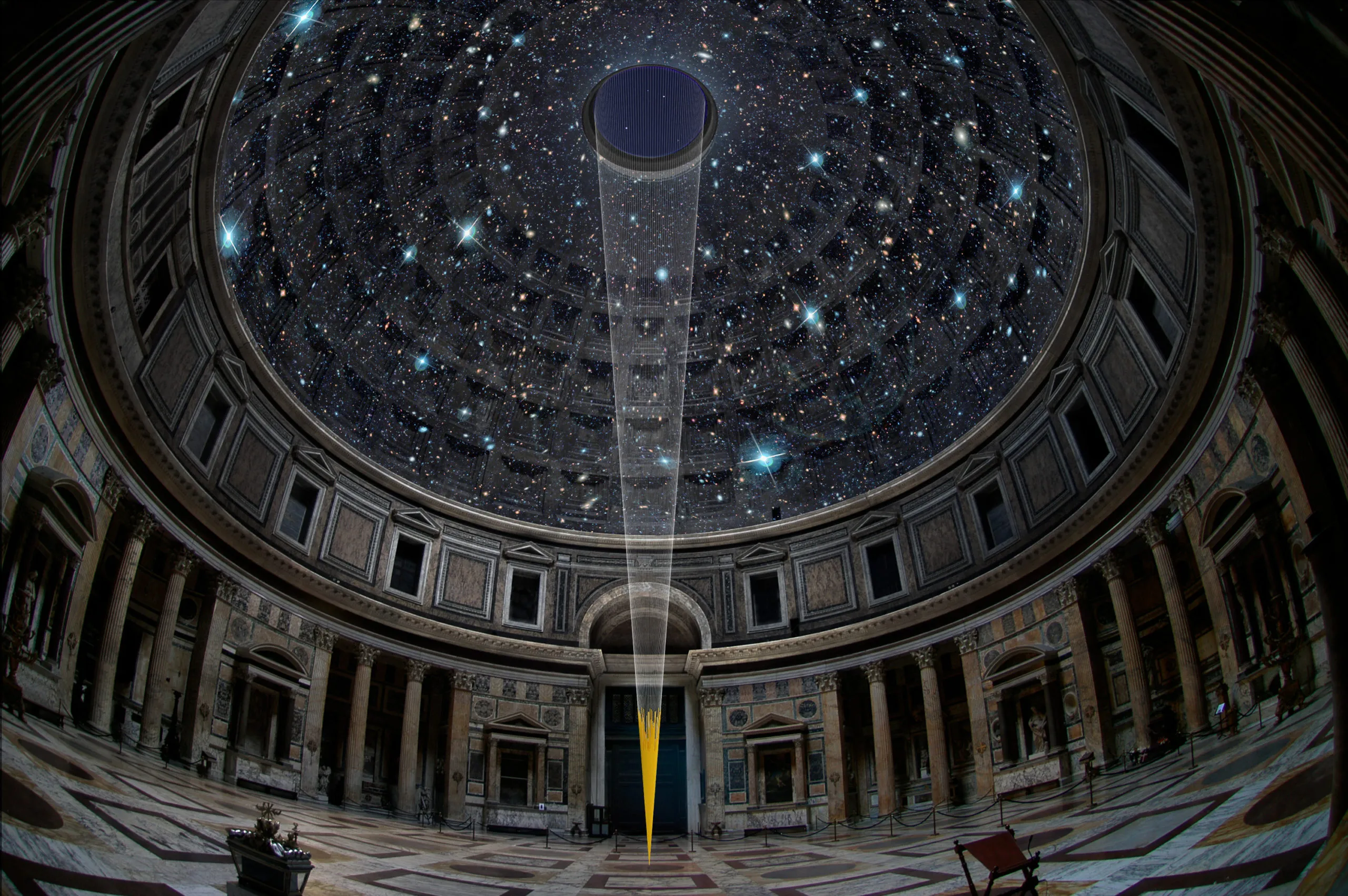
The oculus is an architectural aperture and cosmological statement. Its beam translates time and season into visible drama.
1. Daily Light Behavior
- Morning: beam starts angled toward entrance niches.
- Midday: vertical-ish shaft saturates central floor circle.
- Late: beam drifts toward western niches, softening edges.
2. Seasonal Shift
| Season | Beam Quality | Visitor Tip |
|---|---|---|
| Winter | Lower sun altitude → elongated beam arcs | Visit late morning for dramatic slant |
| Equinox | Balanced trajectory, near symmetrical noon effect | Perfect for photography of centered column |
| Summer | High altitude → compact intense cylinder | Use sunglasses; capture saturated dust motes |
3. Symbolic Readings
- Pagan: Eye to heavens, all gods witnessing civic ritual.
- Christian: Light as divine presence—sermons reference illumination metaphors.
- Civic: Continuity of Rome—the beam marks enduring cultural center.
4. Rain Phenomenon
- Drops fall freely; convection pulls moisture downward creating ephemeral mist.
- Floor drainage circulates water outward—watch subtle rivulets toward bronze covers.
- Acoustic shift: pattering dome reverberation adds soft white noise.
5. Photography & Ethics
- Avoid high-flash exposures—destroys ambience.
- Use fast shutter for dust mote freeze; low ISO preserves gradient.
- Step aside quickly after center shot; share vantage fairly.
6. Experiential Micro-Meditation
Stand under beam (if not roped) eyes closed, count breaths to 30, then reopen—contrast adaptation intensifies perceived brightness and spatial depth.
7. Light Misconceptions
- Myth: beam acts as sundial hour marker—partially; coarse seasonal indicator rather than precise clock.
- Myth: rain never enters—false; controlled drainage prevents flooding.
Bottom Line
The oculus converts cosmological motion into a living interior installation—ancient engineering functioning as time-based art.
关于作者

Symbolism Analyst
我写下这份指南,帮你无压力地参观万神殿——清晰的购票指引、本地贴士与不容错过的亮点。
Tags
Pantheon oculus
light beam
solar alignment
equinox
rain
Comments (0)
Leave a Comment
Loading comments...