Pantheon History – Timeline From Agrippa to Today
Complete Pantheon timeline: Agrippa’s original, Hadrian’s reconstruction, medieval survival, Renaissance impact, national burials, and modern conservation phases.
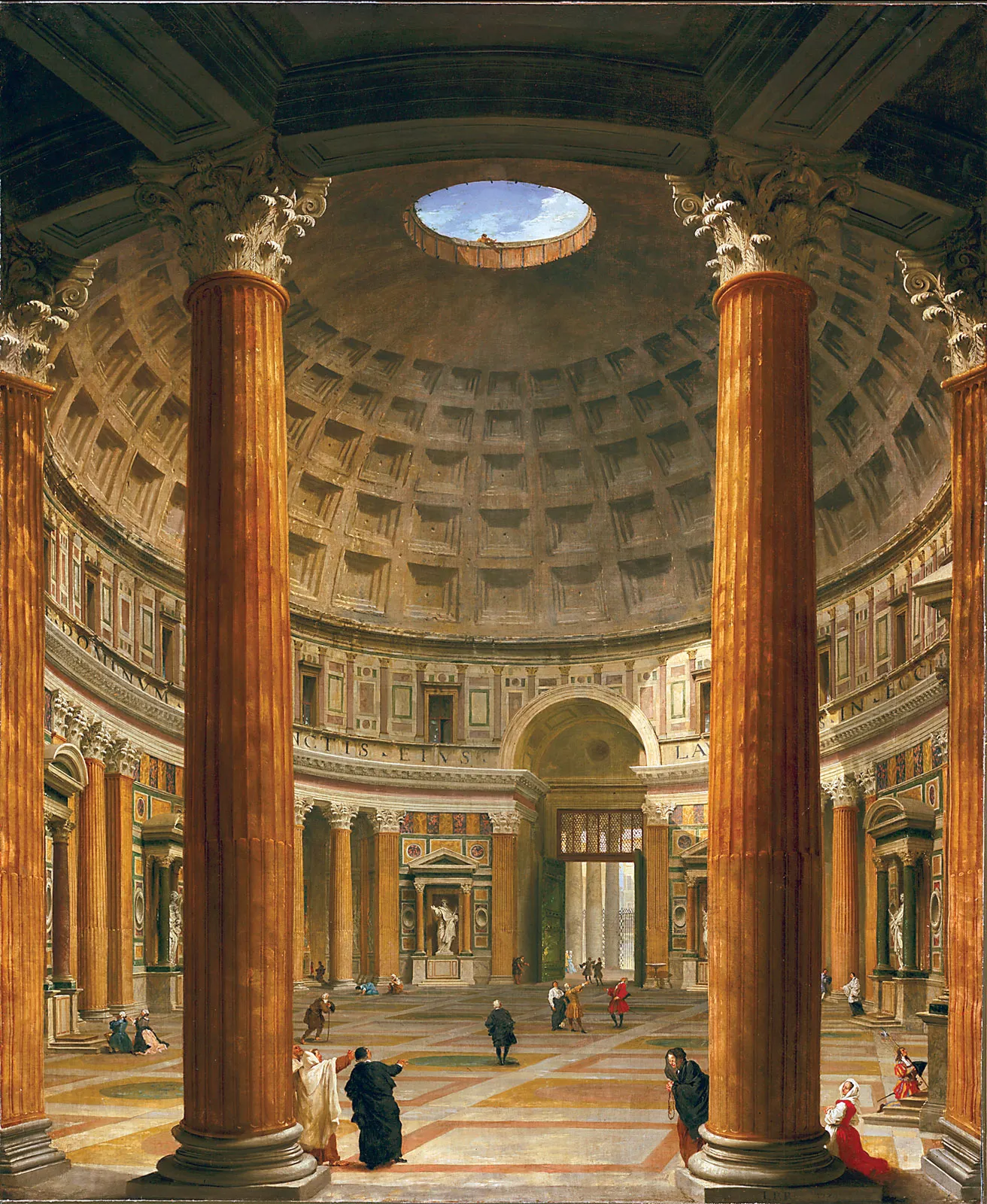
The Pantheon compresses nearly two millennia of Roman, Christian, and national Italian history into one structure that never became a ruin. Its continuity stems from adaptive identity shifts.
Quick Timeline Table
| Date | Event | Significance |
|---|---|---|
| 27–25 BCE | Agrippa builds original temple (likely conventional rectangular) | Honors Augustus’ divine narrative |
| ca. 80 CE | Fire under Domitian | Early structure damaged |
| 110 CE | Trajan-era fire | Sets stage for full rebuild |
| 118–125 CE | Hadrian reconstructs present rotunda & portico | Engineering leap; inscription retains Agrippa credit |
| 4th c. | Imperial pagan decline | Temple use shifts; unclear rituals in late antique period |
| 609 CE | Byzantine Emperor Phocas grants; consecrated as Christian church | Rebranded as St. Mary and the Martyrs – survival secured |
| 8th–12th c. | Medieval maintenance & sporadic spoliation | Bronze and marble reused elsewhere |
| 15th–16th c. | Renaissance artists study classical geometry | Dome proportions influence Brunelleschi, others |
| 1625–1632 | Urban VIII removes bronze from portico (cannons for Castel Sant’Angelo) | Controversial Papal resource reallocation |
| 1870s | Italian unification; royal tombs installed (Vittorio Emanuele II, Umberto I, Margherita) | National symbolism layer |
| 20th c. | Scientific conservation studies | Material analysis, humidity control |
| 21st c. | Visitor management + digital scans | Balances tourism with preservation |
Inscription Mystery
"M·AGRIPPA·L·F·COS·TERTIVM·FECIT" credits Agrippa though Hadrian’s design stands. Hadrian’s choice: political humility & nostalgic Augustan alignment.
Survival Factors
- Early Christian repurposing prevented abandonment.
- Robust Roman concrete dome with graded aggregate resisted collapse.
- Continuous symbolic adaptation (imperial → papal → national) reinforced maintenance budgets.
Renaissance Lens
Humanists praised purity of classical form; measured column spacing & dome ratios fed the treatises of Serlio and Palladio. The Pantheon became a didactic model—a living textbook.
National Tombs & Memory
Burials of Italian monarchs reframed the rotunda as civic memorial. Raphael’s tomb (early 16th c.) prefigured this transformation; artists’ reverence established Pantheon as an honor space.
Modern Research
Laser scanning, photogrammetry, environmental sensors track micro-cracking, water ingress around oculus ring, and salt migration in marble panels.
Ongoing Questions
- Exact agricultural or celestial ritual of original temple unclear.
- Original Hadrianic construction sequencing: debate about simultaneous portico/rotunda phases.
Bottom Line
The Pantheon endures because each era found new meaning in it—pagan, Christian, artistic, national. Its layered identity is as important as its concrete.
Về tác giả

Classical Historian
Nội dung biên tập độc lập dựa trên thông tin chính thức của Pantheon, Turismo Roma, tài nguyên dành cho khách của vương cung thánh đường và Encyclopaedia Romana tại Đại học Chicago. Quy định và giá chính thức: https://direzionemuseiroma.cultura.gov.it/pantheon/ . Lịch sử và kiến trúc: https://www.turismoroma.it/en/places/pantheon . Mô tả và giá gói lấy từ danh mục đối tác được cung cấp, không phải báo giá theo thời gian thực. Thông tin thực tế được kiểm tra tháng 11/2026; xem thông báo chính thức trước chuyến đi.
Tags
Comments (0)
Loading comments...