Pantheon History – Timeline From Agrippa to Today
Complete Pantheon timeline: Agrippa’s original, Hadrian’s reconstruction, medieval survival, Renaissance impact, national burials, and modern conservation phases.
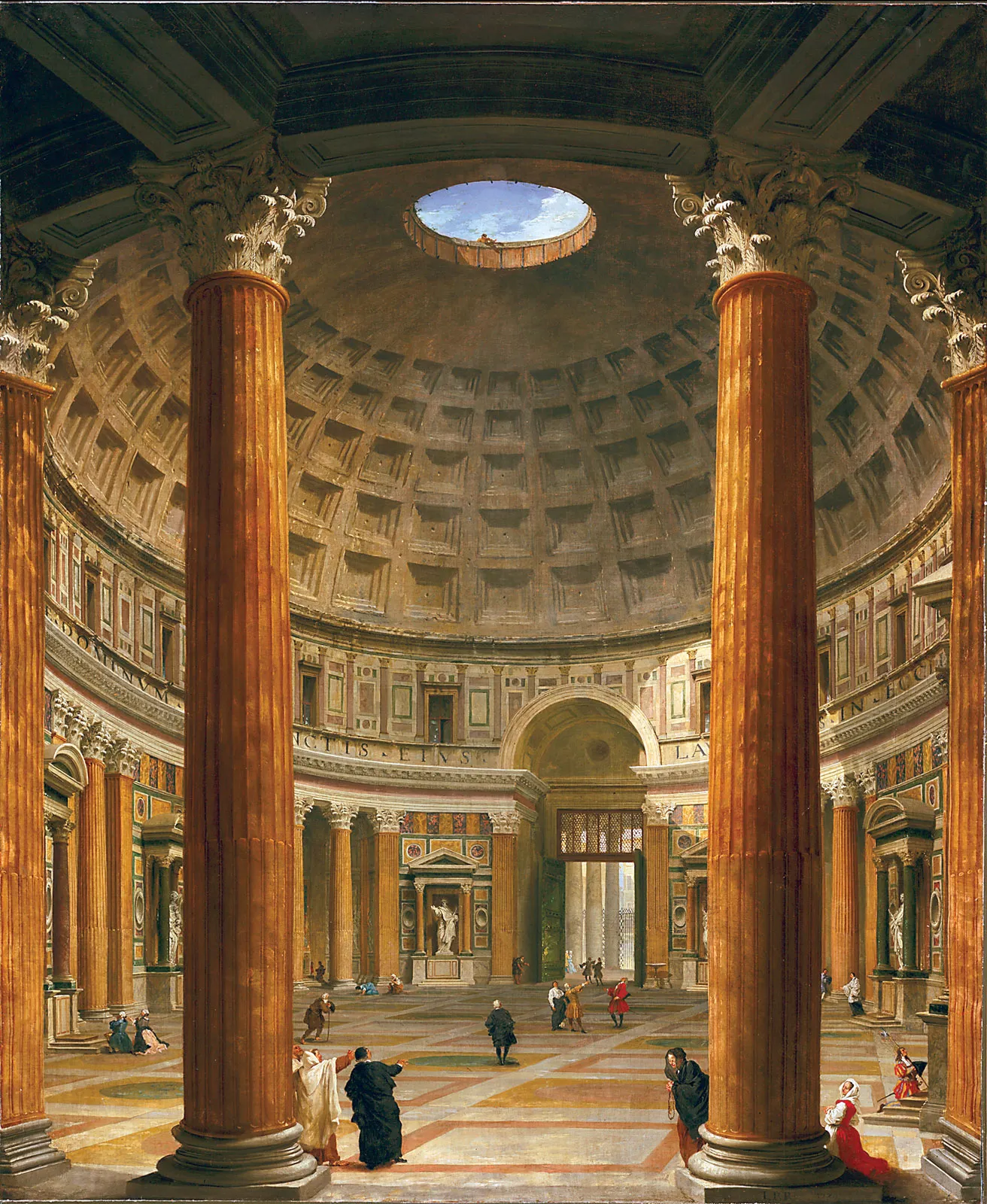
The Pantheon compresses nearly two millennia of Roman, Christian, and national Italian history into one structure that never became a ruin. Its continuity stems from adaptive identity shifts.
Quick Timeline Table
| Date | Event | Significance |
|---|---|---|
| 27–25 BCE | Agrippa builds original temple (likely conventional rectangular) | Honors Augustus’ divine narrative |
| ca. 80 CE | Fire under Domitian | Early structure damaged |
| 110 CE | Trajan-era fire | Sets stage for full rebuild |
| 118–125 CE | Hadrian reconstructs present rotunda & portico | Engineering leap; inscription retains Agrippa credit |
| 4th c. | Imperial pagan decline | Temple use shifts; unclear rituals in late antique period |
| 609 CE | Byzantine Emperor Phocas grants; consecrated as Christian church | Rebranded as St. Mary and the Martyrs – survival secured |
| 8th–12th c. | Medieval maintenance & sporadic spoliation | Bronze and marble reused elsewhere |
| 15th–16th c. | Renaissance artists study classical geometry | Dome proportions influence Brunelleschi, others |
| 1625–1632 | Urban VIII removes bronze from portico (cannons for Castel Sant’Angelo) | Controversial Papal resource reallocation |
| 1870s | Italian unification; royal tombs installed (Vittorio Emanuele II, Umberto I, Margherita) | National symbolism layer |
| 20th c. | Scientific conservation studies | Material analysis, humidity control |
| 21st c. | Visitor management + digital scans | Balances tourism with preservation |
Inscription Mystery
"M·AGRIPPA·L·F·COS·TERTIVM·FECIT" credits Agrippa though Hadrian’s design stands. Hadrian’s choice: political humility & nostalgic Augustan alignment.
Survival Factors
- Early Christian repurposing prevented abandonment.
- Robust Roman concrete dome with graded aggregate resisted collapse.
- Continuous symbolic adaptation (imperial → papal → national) reinforced maintenance budgets.
Renaissance Lens
Humanists praised purity of classical form; measured column spacing & dome ratios fed the treatises of Serlio and Palladio. The Pantheon became a didactic model—a living textbook.
National Tombs & Memory
Burials of Italian monarchs reframed the rotunda as civic memorial. Raphael’s tomb (early 16th c.) prefigured this transformation; artists’ reverence established Pantheon as an honor space.
Modern Research
Laser scanning, photogrammetry, environmental sensors track micro-cracking, water ingress around oculus ring, and salt migration in marble panels.
Ongoing Questions
- Exact agricultural or celestial ritual of original temple unclear.
- Original Hadrianic construction sequencing: debate about simultaneous portico/rotunda phases.
Bottom Line
The Pantheon endures because each era found new meaning in it—pagan, Christian, artistic, national. Its layered identity is as important as its concrete.
About the Author

Classical Historian
I wrote this guide to help you experience the Pantheon without stress — with clear tickets, insider tips and the highlights you shouldn't miss.
Tags
Comments (0)
Loading comments...